Monday, March 30, 2009

Cheese Wars

I receive the Culinary History Enthusiasts of Wisconsin (CHEW) email newsletter and they had a little piece on upcoming food based movies included in this year's Wisconsin Film Festival. One is a short film called "Cheese Wars," a documentary on the battle between California and Wisconsin for cheese production dominance.

One might think, "Isn't it the more cheese the merrier? Why does it have to be a war?"

Because California started it.

If their marketers had left well enough alone and not forced upon the nation the campaign known as "happy cows" perhaps we all could have been friends.

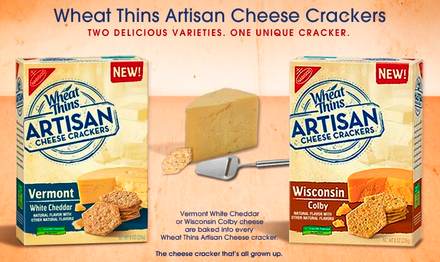
Instead, I feel a certain sadistic satisfaction in pointing out that when Wheat Thins came up with a new cheese snack, California cheese flavor was significantly absent.


More info about Cheese Wars and the Wisconsin Film Fest

Blog post on Cheese Underground.

And just for fun, I found this clip of some cows in Wisconsin. See how horrible the weather is? Now I'm not saying that there aren't factory farms in WI, and I'm not saying it doesn't get cold, but you don't see Wisconsin implementing a campaign about how cows in California are going to fall into the ocean when the San Andras give way, do you?

Thursday, March 19, 2009

Forage!

My initial title for this piece was "Absence of Artichokes Leads to Creative Native Cuisine." From the beginning of the year until now, when the first green sprouts start to peek their heads out of the ground, I've been dreaming about gardening. I don't have any space where I now live, but that doesn't stop my brain from whirring while I page through the seed catalogs. One thing quashes my giddiness. I currently live in Zone4-5. That means some more tender plants that grow well in, say, Italy's 8/9/10 zone will not be able to be grown here.

I just finished reading an article on artichokes-where they come from, how to cook them, how they figure in food history. Imagine my sadness to realize that these lovely globes cannot grow well in Wisconsin. However, my sorrow was short lived as I noticed with glee that the first dandelion of the season was sprouting on my front lawn.

Okay. Dandelions are not artichokes. But I've read nettles have a distinct artichoke-like flavor. And then there's the sunchokes that grow wild here in the Midwest, not related to artichokes except by their similar-sounding name (also called Jeruselum Artichokes), but considered a healthy delicacy. The more I thought about it, the more I grew excited to investigate the many delicious or at least new and different foods that will soon be growing all around me.

One of the first things to do is to recognize that these natural items may have different effects on your digestive system than cultivated crops. So eat with caution until your body acclimatizes. Also, be 100% sure that what you are gathering is what you think it is. Don't think you have smooth sumac when you really have poison sumac! This goes triple for mushrooms.

As I started to look for items, I soon grew weary looking up to see if each and every one was truly native, or if it might be an edible invasive. In the following paragraphs, you'll see I've mixed the two groups around at will. I mostly was looking for foods that grow wild, regardless of their original origin.

I started my search with the plants I know. Borage and nettles are two leafy vegetables that can be gathered. The prep time for these will turn out to be more than one might be use to-first you have to find them and pick them. With borage, the larger leaves might be too fuzzy to eat. You may want to stick with using the flowers for garnish. Another thing borage can be used for is herbal remedies (juice from the leaves or oil from the seeds can have soothing effects. Please research dosages and recommended preparations.) With nettles, use only young plants or tender leaves from older plants. You will need to use gloves because they are called "stinging" nettles for a reason. Again, these can be used for herbal remedies-everything from tea to hair rinse! And the ways to cook them is almost endless. You can rinse them after you get home, then place them in hot water for 20 minutes. This will make them able to be used in just about any way imaginable.

Lambsquarters and pigweed are edible, but there are concerns about toxins and so it should be eaten in moderation. Milkweed flower buds can be gathered and steamed and taste like a broccoli / cauliflower hybrid. Catmint (or catnip) can be used to make tea. Elderberries grow wild throughout the area I live in. The berries can be made into syrup, jam, used in scones and made into wine. And many people know that dandelions can be harvested and used in salads (as long as they are small enough), dried, chopped and roasted roots can be made into a tea, and the flowers can be made into wine. Wild horseradish grows around here, as do wild grapes, blueberries, small blackberries sometimes called black caps.

Burdock root can be dug up, scrubbed, and sliced razor thin. Simmer 20 minutes or until tender. You may also sauté it, but add liquid and cook it in moist heat another 10 minutes afterwards, or it may not get tender. You may also harvest the burdock's immature flower stalk in late spring, before the flowers appear, while it’s still tender and very flexible. Peeled and parboiled for 1 minute to get rid of the bitterness, it tastes like artichoke hearts, and it will enhance any traditional recipe that calls for the heart of artichokes. Cook this for another 5-10 minutes.

I'm not going to get in to mushrooms too much since they are a dangerous hobby if you're not careful. However, my Dad is an armature mycologist with a whole bookshelf of id books, and so I've had some of the more easily identifiable species such as puffballs, chicken of the woods and (of course) the delicious wild morel.

I expanded my search to include historical foods. I looked at Laura Ingals Wilder books, as well as Native American cuisine. Tribes such as the Hochunk ate corn, especially sweet corn on the cob, nuts, beans and squash. They tapped maple trees for syrup, hunted venison and wild birds, and ground acorn into flour. Wild honey is available, although I wouldn't recommend foraging for it.

Freshwater fish are one huge business in Wisconsin. From the Great Lakes to small streams, you can have whitefish, catfish, pan fish (sun, bluegill), northern pike, walleye, trout or smelt. Smoking or pickling fish is one historical way to store them for later use.

If you add back in to your foraged menu famous local foods such as beer, milk, cheese, sausages, cranberries and apples, you can have a pretty well-rounded local pantry. Let the foraging being!

(P.S. Leave it to Wikipedia to have a nice list of Native American foods.)

Tuesday, March 17, 2009

John Ready “Industrial Arts: Fobs, chains and chatelaines for the jet set and the chevron-let set”

On a chilly night in February, my mother, her younger sister (my dear auntie) and I piled into Mom’s surprisingly roomy Toyota Echo and traveled 60 miles North of Nodine, Minnesota to Rochester. We were headed to the opening of John Ready’s art exhibit at the museum there.


Ready is Associate Professor of Art and Director of the University Gallery at the UW-LaCrosse where my aunt works. His art was part of the Rochester Art Center’s SE Minnesota Artist Exhibition series.


When we arrived, it took us forever to find the entrance to the museum. The sprawling Rochester Art and Civic Center seemed to go on forever. Finally we found our way in and climbed the stairs to the third floor. There were only three art pieces there, but as we began our perusal, we bumped into an old group of friends and did some quick catching up. Small world.


We descended to the second level where we found John’s stuff. John attended graduate school in New York and was in part inspired by beads bought at an Afghani market near his home. Nature, history, value and accumulation seem to be themes of his works, which appear to look like large key chains or really large chandeliers. My aunt said she could picture them hanging from the rafters of barns. They are made of not only found objects, but castings of objects such as Avon bottles cast in cement.


I talked with the artist briefly and found out that he had actually lived in the house next to the creamery in Nodine, where I group up! His father used to work there (the building is now abandoned and both Ready and I expressed a desire to own the place and bring it back to life in some way.) John has exhibited his artwork in solo and group shows across the country. He lives in LaCrescent.


We finally found our way down to the ground floor where again I ran into a friend-an artist who had been a few years ahead of me in school. There was many other exhibits here, such as a video of a group of people moving a sand dune 4 inches, maps of Rochester drawn by students, and a large display of incinerator vs. landfill as ways to dispose of waste.


When we made it to the bar, the industrial music had started (why do all these art exhibits seem to think DJs playing noise are the best accompaniment?) We had a drink and ate some extremely garlicky salsa and some yummy cheese and artichoke dip. A table was set up for people to try their hands at sketching a map of the area (much like the students had done). My mom had a great time drawing a creature asking “Where is I-90?” and under “Legend” she wrote: Once upon a time there was a great and powerful wizard… She’s so funny.


Ready’s exhibit, “Industrial Arts: Fobs, chains and chatelaines for the jet set and the chevron-let set” runs through April 19, 2009.

Monday, March 16, 2009

RE: new tourism logo and slogan here in Wisconsin

A little off topic: Our Governor just spoke in La Crosse WI at the Conference on Tourism and unveiled the new "Live Like You Mean It." logo and motto that will grace brochures, websites and ads for the next few years at least.

I see that this slogan will be used not only for tourism, but for business and other state programs. And I understand the want of the Governor to call on all residents to support this as a way to prove we are "fiercely proud, hard working, loyal and have fun with life; and where the culture fuels creativity and embraces original thinking." The idea behind the branding of Wisconsin is to ''emphasize Wisconsin's creativity, hospitality and unique destinations under the platform, "In Wisconsin, originality rules."" And the logo and slogan support this.

As a marketing person, I understand all this. And I understand the great burden of coming up with something that can be used by Universities, cheese makers and bed and breakfast owners alike. But, in the same breath, what the Tourism Department and the PR agency Red Brown Kle came up with is still kinda... square (as is the whole Wisconsin Department of Tourism website in fact.) Wisconsin strikes me as more of a thoughtful, philosophical-yet-determined state, and I don't know if that really comes through. Still, we'll see how it goes. It would be nice to get this state some much deserved attention outside of the crazy teen sex scandals that have been appearing lately. There is a depth of interesting things happening here, there's a quirky humor to the place, and the sheer beauty of the rivers and Great Lakes, rolling hills and fields, the balance of the four seasons and the respect people have here for there history gives Wisconsin a real identity that I guess you just have to experience.


Thursday, March 12, 2009

The Internet Gives Me Answers I Would Have Never Thought to Ask

Case in point:

The other night I was singing a song about Mr. Cat and Mr. Goldfish as I made dinner (a delicious turnip soup). In the back of my mind, I do things like this, alone, in my tiny 400 sq. foot home, imagining that I'm being filmed for a YouTube video. Okay-first off, yes. I'm crazy. But secondly, I started to think, "Hm. I wonder if Lil Pouches (the goldfish) really is a Mr.?"

Would I have even thought of looking up the answer to this question at any other time in my life? Would I even have been composing a theme song for an online cooking show if the internet didn't exist? Even if I had, could I have ever found the answer as quickly and painlessly by going to the library as I did online? No way.

Ah the wonders of technology.

And I think Mr./Ms. Pouches is still to young to tell.

Tuesday, March 10, 2009

Cleveland email tour for my good friend James


Click on my awesome map!


Hi there James --

As promised, here is a list of things to do in Cleveland when you're there:

Downtown eating / drinking:

Winking Lizard-811 Huron Rd E. Cleveland, OH 44115 (216) 589-0313 http://www.winkinglizard.com/data/content/gateway.asp
- I use to work at one of these places (the one in Lakewood http://www.winkinglizard.com/data/content/lakewood.asp - note- mine is much better! About 10 minutes from downtown @ 14018 Detroit Ave. Lakewood, OH 44107-4522 Phone: 216.226.6693). Awesome beer list
Fat Fish Blue - 21 Prospect Ave E Cleveland, OH 44115 (216) 875-6000 http://www.fatfishblue.com/about.html
- Blues and Cajun
Pickwick and Frolic - 2035 E 4th St Cleveland, OH 44115 (216) 241-7425‎ http://www.pickwickandfrolic.com/Pickwick/index.html
- Fun place, don't let the dinner theater scare you. Restaurant and martini bar. Open late.
Hard Rock Cleveland - 230 W Huron Rd # 10050 Cleveland, OH 44113 (216) 830-7625 - http://www.hardrock.com/Locations/cafes3/cafe.aspx?LocationID=45&MIBEnumID=3
- A chain but for Godssake, you're in the Rock and Roll City!

A little ways from downtown:
Great Lakes Brewingwww.greatlakesbrewing.com, 2516 Market Ave., 216-771-4404
- First microbrewery in Cleveland.

Here is a listing of many of the Irish pubs in town:
http://www.cleveland.com/goingout/index.ssf/2009/03/st_patricks_day_restaurant_pub.html

Other stuff:

West Side Market-1979 W 25th St, Cleveland, OH‎ - (216) 664-3386‎ huge, cool indoor market where you can buy a sandwich, raw meat, or a load of bread: http://www.westsidemarket.org/about.html
- home of the West Side Market Cafe http://www.westsidemarketcafe.com/
Zoo and RainForest -3900 Wildlife Way, Cleveland, OH‎ - (216) 661-6500http://www.clemetzoo.com/
- The RainForest is worth the price of the ticket
Free Cleveland museum of art11150 East Blvd, Cleveland, OH‎ - (216) 421-7350‎ - http://www.clemusart.com/
- HUGE and FREE
Little Italy Neighborhood - cheepest place to eat = Mama Santos12305 Mayfield Rd Cleveland, OH 44106 216-421-2159 http://cleveland.citysearch.com/profile/7975290/
- Here is a good walking map of these streets: http://www.classactresale.com/sitebuildercontent/sitebuilderfiles/Printable_WalkingMap_8x11.jpg
Coventry Neighborhood - http://www.coventryvillage.org/shops.html
- Home of Big Fun Toys 1814 Coventry Road Cleveland Heights, Ohio 44118 http://bigfunbigfun.com/ , City Buddha http://citybuddha.com/ and more
Arabica and Phoenix http://www.phoenixcoffee.com/shop/ coffee houses are both good places to chill
Emerald Necklace- This is the park system that circles the city. http://www.clemetparks.com/visit/index.asp?ispopup=yes&action=allmap
Valley Parkway is one way to enter the parks from the West.
Michael Symon Restaurants (Iron Chef America! Lover of all things Pork! My hero!) - http://www.lolabistro.com/
One gigantic cemetery - http://www.lakeviewcemetery.com/about_lakeview.html E. 123rd Street and Euclid Avenue. They actually call it an outdoor museum. Buried here are the likes of President Garfield, John D. Rockefeller and Eliot Ness
Botanical Gardens and Glasshouse -11030 East Blvd, Cleveland, OH‎ - (216) 721-1600http://www.cbgarden.org/Visit/default.aspx?id=4050 - if you don;t get to the RainForest, you can visit the Glasshouse to warm up.
BA Sweeties Candy company - 7480 Brookpark Rd. Cleveland OH 44129 - http://www.sweetiescandy.com/ - Largest candy store in the US

I hope you get a chance to see the Rock Hall-Saturday is free so it will probably be packed.

And if you get really lost, call me, or check out the Downtown Cleveland Visitors Center

The Higbee Building
100 Public Square, Suite 100
Cleveland, Ohio 44113-2290
Located at the Southwest corner of Euclid Ave. and Ontario - Map
Phone: 216.875.6680
Email: visinfo@positivelycleveland.com


- Sarah B.


P.S. Donnie's fish is still alive.

Sunday, March 08, 2009

Nurture the Natives – Eat the Invasives!

I've been searching for a good catch phrase lately. The title of this post is one I've considered. Since spring is on it's way (I know it is! I can feel it! So what if there's a winter weather warning today?) I've been gearing up for some foraging to take place as things begin to sprout.

One think I found was that some invasive species (Japanese knotweed and garlic mustard for instance) are edible! Heck, even dandelion greens have appeared in fancy salads lately, their roots can be made into a drink and their flowers can be made into wine. What a great way to get rid of weeds!

I've also been a proponent of eating invasive fish such as carp. Round where I live, people smoke 'em!

Thursday, March 05, 2009

Poem

10/27/2008

"Goodbye for now, my little piece of heaven.
Colorful trees, hazy waters,
the aging fields. The clouded dreams.
I will return for you soon."